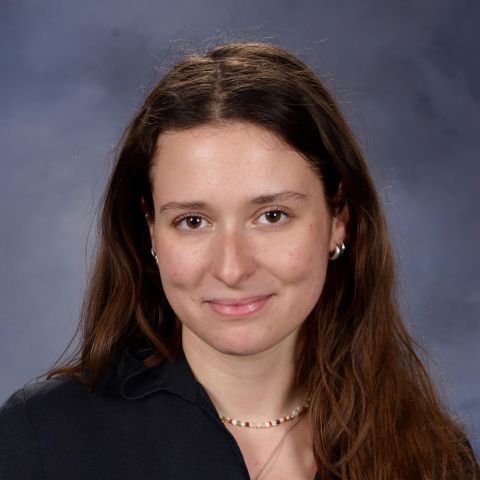
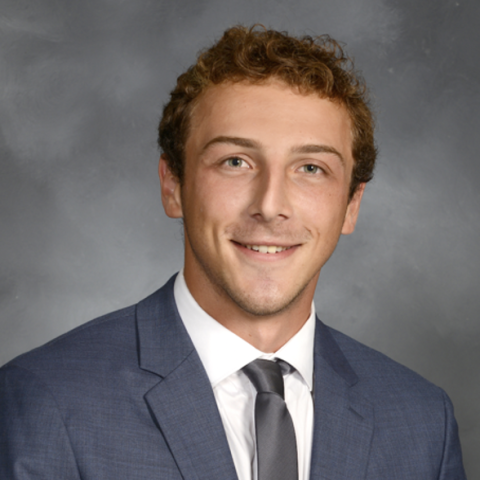
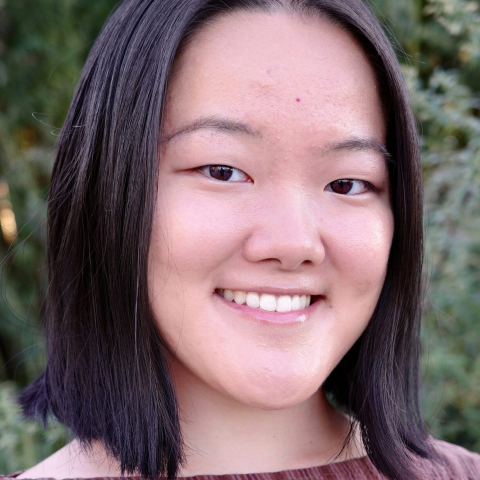
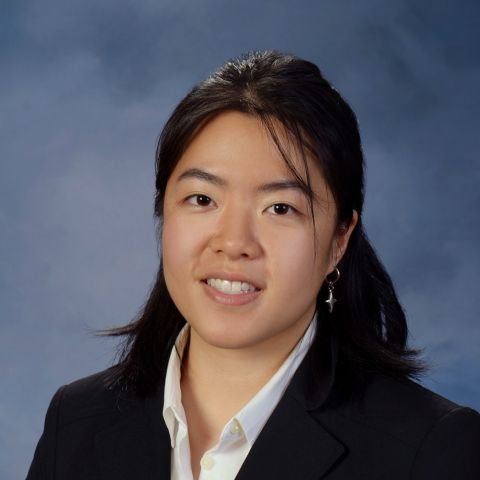
Each year, Fulbrighters conduct research, study and teach English in countries around the globe. Cornell University is a Fulbright Top Producing Institution and has sent over 600 students across the globe as part of the Fulbright U.S. Student Program since the 1940s.
The Fulbright program is the U.S. government's flagship international educational exchange program. The Mario Einaudi Center for International Studies administers the Fulbright program at Cornell, providing all the resources students and alumni need to apply for Fulbright funding for international experiences.
Meet the Fulbrighters
Mia Battistella ’26
Argentina
English Teaching Assistant
“While in Argentina I want to engage with community members by organizing dance classes that feature both traditionally American and Argentine styles, bringing people together through shared creativity and building opportunities for intercultural exchange.”
Matthew Cabiles ’24
Uzbekistan
English Teaching Assistant
“My future in international law starts with a foundation in teaching, and this grant is the first step in my path toward serving at the intersection of the U.S. and global communities.”
Alanna Cooney ’26
Taiwan
English Teaching Assistant
“My goal is to continue deepening my engagement with the world and contribute to fostering stable U.S.-Asia relations. Upon my return, I want to help others see the value of international exchange and encourage more people to explore opportunities abroad in Asia.”
Nina Davis ’26
Portugal
English Teaching Assistant
“Through investigation I hope to use the cultural and ambassadorial skills from the Fulbright program to enhance my writing and interviewing processes. In my writing and academic career, I will likewise incorporate my experience in Portugal as a student-teacher with an emphasis on the importance of cultural exchange.”
Bryce Demopoulos ’23, MD ’28
Uganda, Fulbright Fogarty Fellowship in Public Health
Research: Expanding Orthopedic Trauma Surveillance in Uganda: Care-Seeking Paths and Injury Patterns
Read Bryce's abstract
Uganda faces a rising burden of orthopedic trauma, particularly from road traffic injuries, which disproportionately affect young and economically productive populations. While prior studies have demonstrated the feasibility of trauma registries in district hospitals and highlighted the socioeconomic consequences of injury, comprehensive data on orthopedic trauma at regional referral centers remains limited. My project seeks to expand orthopedic trauma surveillance jointly among several Regional Referral Hospitals in Western Uganda. Under the mentorship of Dr. Daniel Kisitu at Mbarara University of Science and Technology, the project will pursue two aims: (1) examine care-seeking pathways and delays to care, documenting where patients first sought treatment and the barriers they faced before arriving at a hospital; and (2) characterize mechanisms and patterns of injury, correlating causes such as road traffic collisions and falls with fracture type, operative management, and early outcomes. Methodologically, the project will integrate registry-based data collection with structured patient and family interviews to capture both clinical and social determinants of trauma care. Findings will be analyzed to identify predictors of delay and variation in injury presentation and management. Beyond the hospital, I will engage with schools, community leaders, and bonesetters to share findings and promote injury prevention. This project will provide actionable evidence to improve trauma care delivery in Uganda while deepening cross-cultural exchange and fostering lasting partnerships.
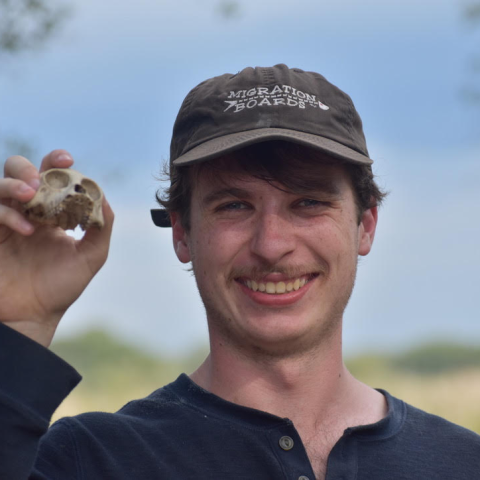
William “Gus” Dupin ’26
Indonesia
Research: Developing Acoustic Approaches for Non-invasive Health Monitoring of Wild Orangutans
Read Gus's abstract
Orangutans are a highly vocal, endangered great ape. Extensive work is being conducted to study orangutans and conserve their populations through passive acoustic monitoring of their long-distance vocalizations, commonly referred to as long calls. My project aims to explore our ability to acoustically monitor the health of orangutan populations by identifying features in their long calls that are associated with poorer health. My research combines the collection and analysis of long calls that will be recorded while following orangutans with the assessment of orangutan health through the analysis of non-invasively collected urine and feces, along with visual observations. From recordings, I will measure high and low frequencies, duration, chaos, shimmer, jitter, and biphonation of the long calls. Some of these call features are affected by smoke inhalation in orangutans and are indicated to be impacted by endurance capabilities in baboons. I will analyze blood presence, ketone levels, and specific gravity in the urine, along with the core temperature and consistency of the feces. I will then examine the relationships between these call features and the health of the caller to develop methods to assess the health of orangutans using passively or focally recorded calls. This will improve our ability to conserve orangutans by allowing us to easily monitor the health of many orangutans through the use of acoustic methods.
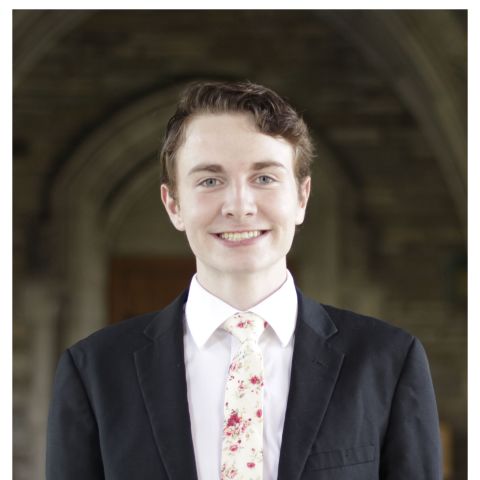
Hyrum Edwards ’25
Turkey
Master of International Relations: Religion and Secularism in Turkey
Read Hyrum's abstract
At Bogaziçi University, I will study the complex relationship between religion and secularism in Turkey by comparing the laws of secularism in several nations in Europe. I hope to write a thesis to improve and broaden the understanding of how the Directorate of Religious Affairs, a state-sanctioned organization that regulates Islam in Turkey, interacts with the Turkish ideal of secularism. This will further my ability to advocate for the Turkish-American friendship as an employee of the United States Department of State after the program, because a further understanding of Turkish politics will improve my ability to enhance bilateral relations between Turkey and the United States.
Annie Fu ’20
Study in Taiwan
Masters in Creative Industries Design
"As an educator at universities and arts organizations in New York, I will integrate the case studies from my Fulbright research into my journalism design curricula and my practice as a teaching artist."
Amanda Huang ’26
Germany
Research: Multimodal Optical Imaging for Intraoperative Tumor Diagnosis and Ablation
Read Amanda's abstract
Optical imaging harnesses the unique properties of light to reveal the structural organization and molecular composition of biological tissue. These techniques are typically non-invasive and offer high spatial resolution, without requiring labelling dyes. This makes them well-suited for addressing an unmet clinical need: the ability to characterize tumors in real-time during surgery for precise resection. The Fulbright grant will support my research developing a novel intraoperative probe that combines linear and nonlinear optical imaging modalities to identify tumor margins and deliver targeted ablation therapy. By reducing the need for multiple operations and advancing surgical techniques, this project represents a potentially pivotal development in surgical treatment of cancer patients. This research will be carried out under the mentorship of Professor Jürgen Popp at Friedrich Schiller University in Jena, Germany. Jena has a deep history and global reputation in biomedical optics, making the Popp Lab an ideal location for my work propelling optical technology towards clinical use. My project's specific aims are to first validate optical imaging methods on cancerous tissue samples and then integrate these techniques into a surgical probe capable of real-time tissue diagnosis and tumor ablation. My previous research conducting nonlinear optical imaging to investigate Alzheimer's disease in brain tissue has refined my experimental and analytical skills central to this project. Beyond the laboratory, while on grant in Germany, I am eager to immerse myself in cultural exchange: volunteer in hospitals, foster international collaborations, pursue my personal interests, and advance my German language skills.
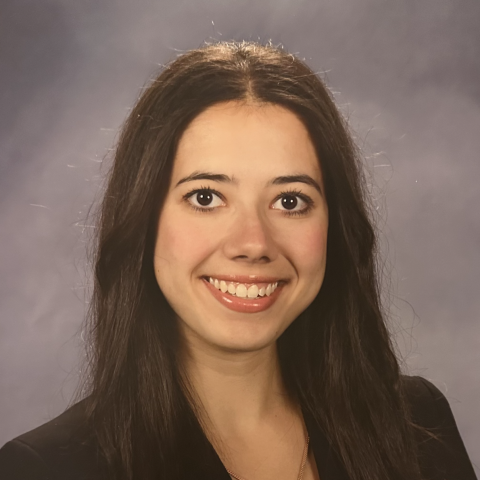
Madeleine Kapsalis ’26
Greece
English Teaching Assistant
“Teaching students abroad will help me strengthen my ability to communicate across cultural differences, which will eventually carry over to my skills in legal practice. Just as there is established trust and vulnerability between the lawyer and the client, this is the kind of relationship built on mutual respect and understanding that I hope to share with each of my students in Greece.”
Arushi Kende ’26
India
Research: The Cultivation of Altruistic Cultures: Seva as a Model for Regenerative Altruism
Read Arushi's abstract
I propose an ethnographic study of seva, the practice of selfless service, in small-scale religious communities in Maharashtra, India. These communities sustain free kitchens, forest schools, farmer-support programs, and elder care, offering dignity and agency to some of India's most vulnerable populations. At a time when rural India faces crises of farmer displacement and agricultural collapse, seva provides not only immediate relief but also long-term social frameworks rooted in reciprocity, resilience, and care My research asks how community members understand seva in their personal lives, how they position service as an alternative to self-interest, and what lessons their models of altruism offer for sustaining service-based communities elsewhere, including the United States. Using participant observation and qualitative interviews, I aim to develop "thick descriptions" of daily service practices and personal narratives, capturing how dignity and agency are cultivated through service. This project contributes to ongoing debates in Anthropology and Religious Studies on altruism, reciprocity, and the gift, while also documenting community-led responses to pressing rural challenges. My preparation includes academic training in Religious Studies, leadership in interfaith service initiatives, and language study in Marathi and Hindi. By highlighting how service creates webs of human connection, I aim to promote mutual exchange between India and the United States on sustaining compassionate, resilient societies in the face of social crisis and rapid change.
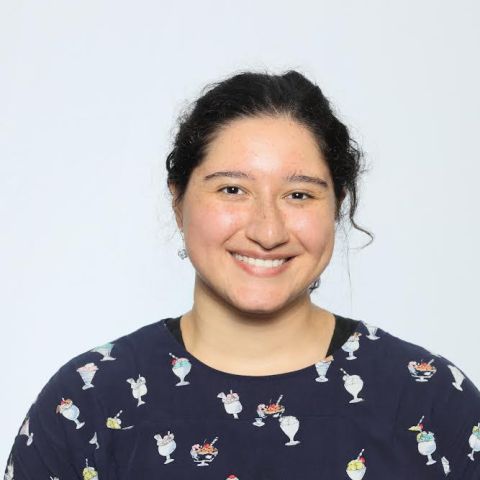
Sarah Langleben ’24
Taiwan
English Teaching Assistant
“Fulbright will enable me to better prepare for founding a company that uses data science to make skincare more accessible. [After the program], I’ll work as an esthetician, and I can speak to clients, peers, and estheticians-in-training about my experience, and the value of cultural exchange in our field.”
Serena Moscarella ’25
Peru
English Teaching Assistant
“After completing my Fulbright grant, I plan to continue working in education across Latin America and the United States. I hope to design and lead programs that are participatory, locally driven, and that meaningfully impact students’ everyday lives.”
Reshma Niraula ’26
Nepal
Research: Does Bilingualism Delay Dementia? A Neurocognitive Study of Geriatric Patients in Nepal
Read Reshma's abstract
This project will investigate whether bilingualism delays the onset and progression of Alzheimer's disease and dementia in older adults in Nepal. Working under the mentorship of Lekhnath S. Pathak at Tribhuvan University and in collaboration with clinicians at Bir Hospital, I will recruit 15-20 geriatric patients, both monolingual and bilingual, to assess cognitive function, language performance, and age of symptom onset.
Nepal's extraordinary linguistic diversity offers a rare opportunity to study these questions in a multilingual setting, producing evidence that will inform both local dementia care and global research. This work will generate pilot data for future large-scale studies, while advancing U.S. and Nepali collaboration in dementia research.
Jake Rosen ’25
Spain
English Teaching Assistant
“I see much to be learned about U.S. social issues through Spain’s past and present dynamics, from censorship to migration. Nine immersive months will multiply the Spanish perspectives already at my core, for dissemination across all facets of my life."
Stephanie Tan ’23
Taiwan
English Teaching Assistant
“After my grant, I will pursue a PhD in counseling or school psychology to further study how best to teach and support kids. Long-term, I hope to work in a school or private practice to help children manage their mental well-being.”
William Taylor ’26
Mongolia
English Teaching Assistant
“After completing my Fulbright grant, I will pursue a career in teaching high school history by studying for a master’s degree in classics. My teaching assistantship in Mongolia will help me supplement my western-centric educational background and develop a more well-rounded understanding of history and intercontinental relationships.”
Jack Turner ’26
Japan
Research: The Shinkansen Effect: Rail Access and Rural Population Stability in Aging Japan
Read Jack's abstract
My project investigates the relationship between transportation infrastructure, particularly Japanese shinkansen high-speed services, and migration patterns, aging demographics, and population stability in the Tokyo to Toyama rail corridor. The study employs a mixed-methods approach, incorporating quantitative analysis of longitudinal population data from 1995 to present and qualitative interviews with municipal officials, transportation planners, and residents to examine the nexus between transit accessibility and rural demographic sustainability. Japan confronts unprecedented rural depopulation amid accelerating demographic aging, problems that I hope to address in future graduate school education in regional planning. Cultural constructs such as furusato (hometown identity) and urban labor dynamics including karoshi (death by overwork) compound these societal challenges and generate complex tensions between aspirational return migration and structural constraints.