
Conference Brings Together Policy and Academic Insights on War in Ukraine
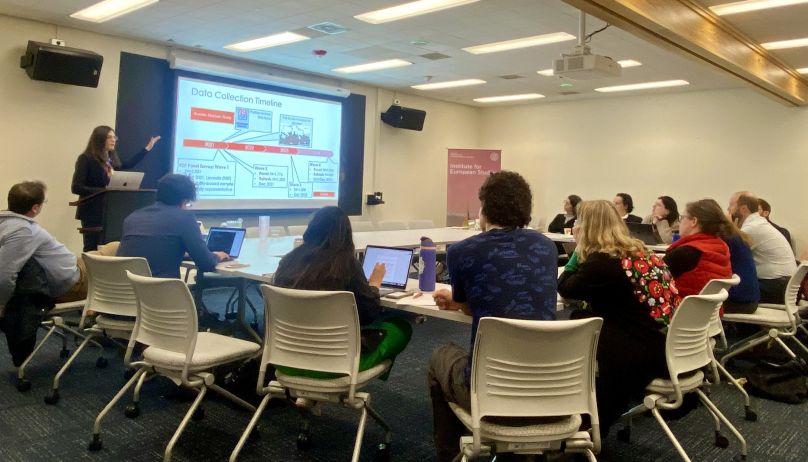
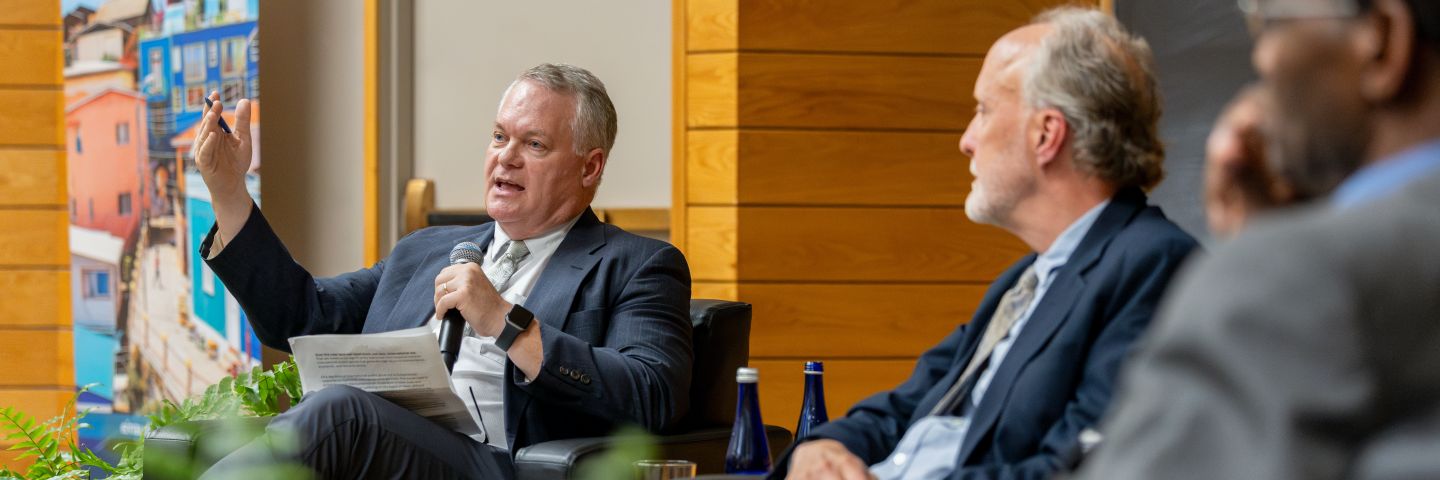
A daylong IES symposium on May 2 gathered academic and policy experts to share their perspectives on Russia’s invasion of Ukraine.
The event was guided by a set of questions including, how does political science research viably inform policymakers and practitioners? And how can partnerships between those in the policy and academic communities deepen research contributions? The symposium was organized by IES’s Eastern Europe faculty research pod, and led by Prof. Bryn Rosenfeld (Government).
The morning opened with a research panel featuring four scholars working across economics, political science, and public opinion. Charles Whitehead (Cornell, Law School) spoke about Ukraine's privatization landscape and the structural conditions needed to attract foreign capital into a postwar economy. Aaron Erlich (McGill, Political Science) traced a decade of survey research in Ukraine, from pen-and-paper surveys in 2015 to AI-assisted interviewing today, offering evidence from a series of publications that underscore the shifting landscape for survey research in a country reshaped by displacement and war.
Jordan Gans-Morse (Northwestern, Political Science) presented findings from an experimental mega-study on what anti-war messages can be the most persuasive for the Russian population. Bryn Rosenfeld (Cornell, Government) closed the panel with research on Russian public opinion, explaining how the government can lead people to express acceptance of a war that many had seemed unlikely to support before it began.
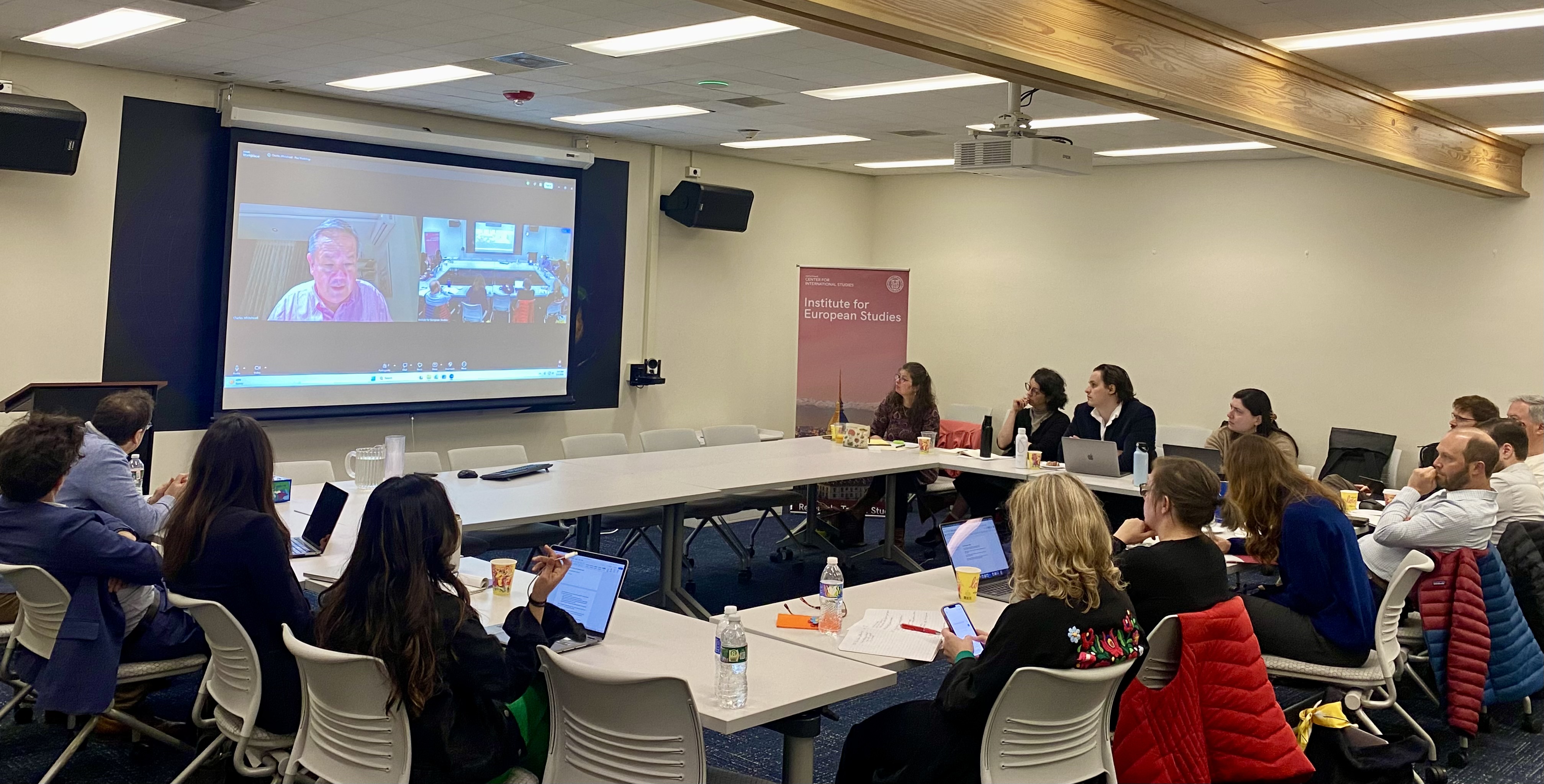
The afternoon roundtable shifted the focus from research findings to the harder question of how those insights reach decision-makers. Regina Faranda, former Deputy Assistant Secretary at the State Department's Bureau of Intelligence and Research, spoke from experience about what lands in policy circles — and what doesn't.
Kimberly O'Haver of the Open Society Foundation brought a concrete case study in drug policy reform in Ukraine, tracing the path from research to law on issues like medical cannabis and trauma-focused therapies for veterans.
In addition to panelists, participants included Cornell faculty, graduate students, and undergraduates, including several students from the region itself. Recognizing varied incentives, tools, and challenges that both sectors face, the group concluded that academic research must foster long-range relationships with policymakers that extend beyond moments of crisis or when a research area is in the news.
Through this sustained interaction, researchers are better able to inform practitioners during major events and to foster joint collaborations via new studies or other partnerships.
Story by Frances Cayton and Georgy Tarasenko, IES Graduate Fellows 2025-26.