
European Studies Graduate Fellows’ Symposium Maps New Paths Across Disciplines, Methods, and Archives
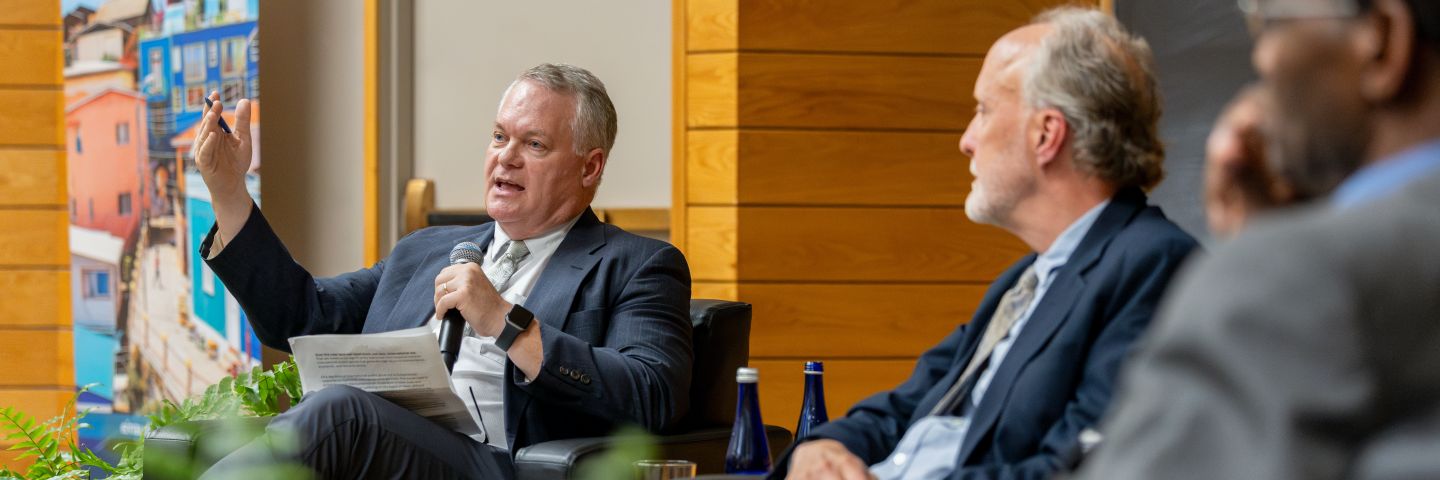
On May 7, 2026 the 2026-25 cohort of IES graduate fellows gathered for a symposium titled “Tracing Europe: Methods, Archives, and Interdisciplinary Encounters.” The Fellows showcased research they had been workshopping together, in smaller groups, throughout the year. The symposium continued these fruitful conversations in conference format, and expanded them to include a broader public of Cornell faculty and graduate students.
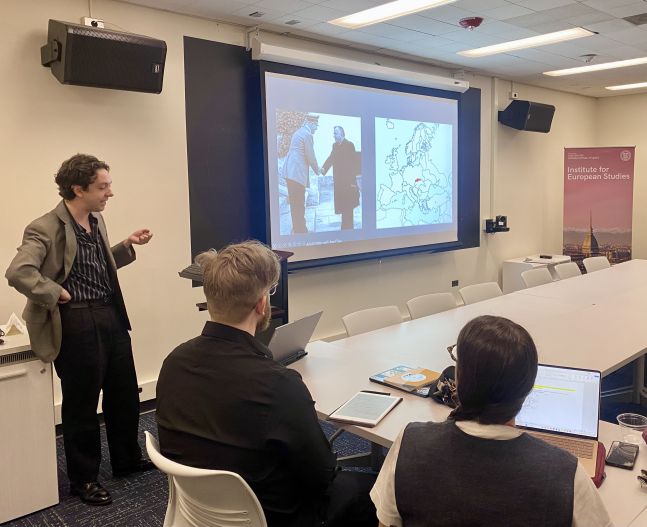
Through this event, IES fellows collectively reflected on the diversity of methodologies and archives across disciplines. This focus captured their common interest and curiosity for disciplinary practices other than one’s own, and a willingness to make their processes and assumptions clear to others. Participants covered diverse fields: History, Government, Communications, Music, Comparative Literature, German Studies, Romance Studies, Medieval Studies, and represented a wide variety of cutting edge work being done by PhD students across the universityThe first panel tackled the topic of community and exchange across Europe, stretching from Ancient Rome to the present. Angela Kothe (Government) opened with a presentation on mapping LGBTQ spaces and public houses across the UK over time. Duncan Eaton (History) explored the changes in sugar beet trade in Slovakia and its impact on economic and political exchange in the interwar period. Julia Sebastien (Communications) rounded out the panel with her research on a virtual reality re-creation of a site in ancient Pompei, Casa della Regina Carolina, combining archeology, communications, and pedagogy to bring this history to the present.
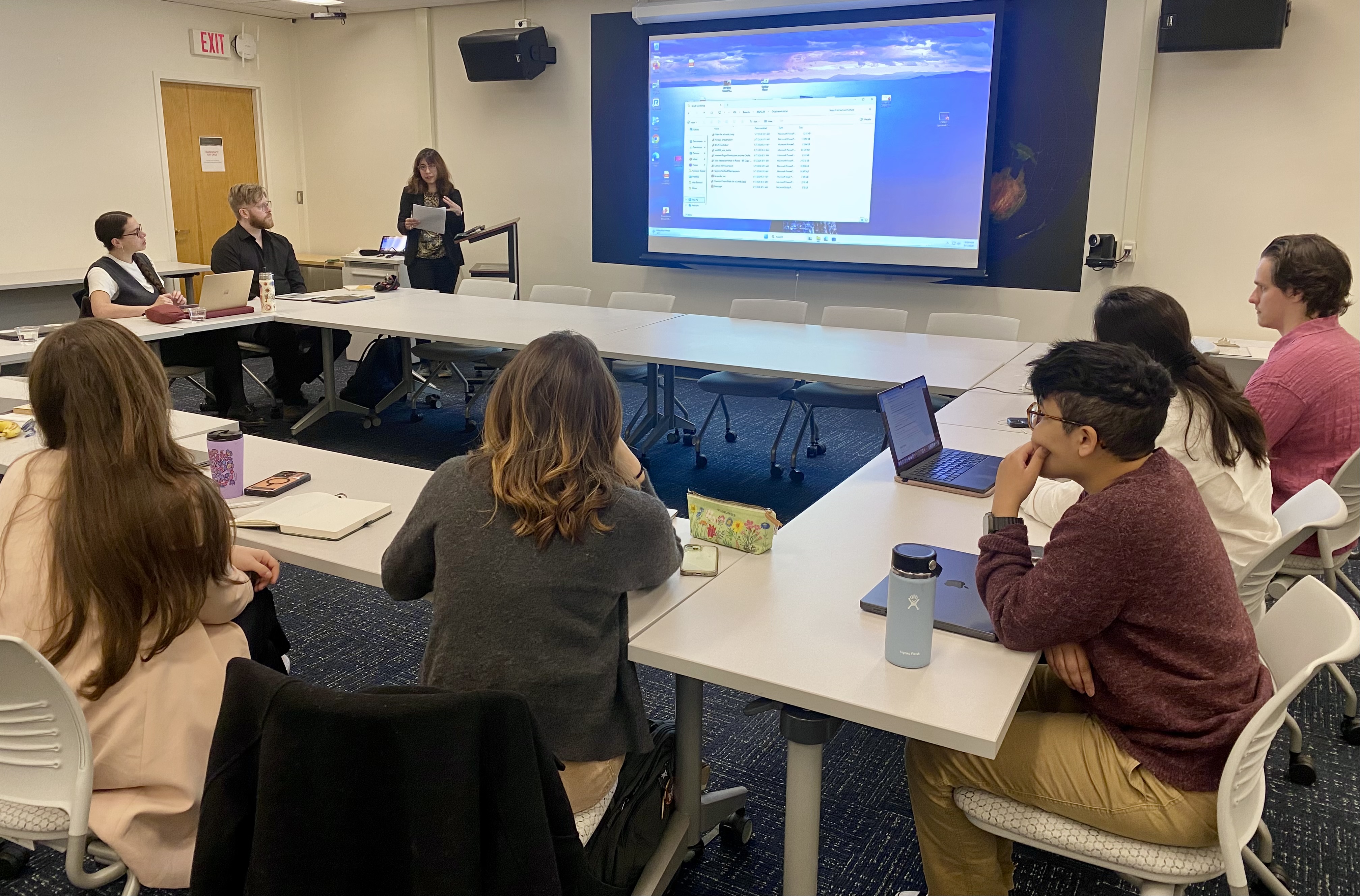
Next, a panel featuring graduate students from the history and government departments explored means of government and control in twentieth and twenty-first century states. Kaitlin Findlay (History) presented on the use of official photography as a reflection of evolving international humanitarian norms in the context of the internment of Japanese Americans and Canadians in the Second World War. Madeleine Lemos (History) followed with an exploration of the tourism campaigns from the fascist Spanish state in the 1960s. Georgy Tarasenko (Government) presented the results of an experimental study on secular versus religious messaging within Russia related to the war with Ukraine, while Frances Cayton (Government) rounded out the panel with her work on civil society organizations and their relationship to democratic backsliding in Poland.
The symposium closed with a third panel exploring artistic expressions and their complex resonances in the context of European history and construction of identities. Xinyu Zhang (Comparative Literature) opened the panel with a theoretical contribution on “poignancy” interrogating fundamental structures of meaning of history relevant to the conceptualization of “Europe” through J. M. Coetzee’s and Fredric Jameson’s writing. Spencer Hadley (German Studies) offered a microhistorical account of musician and activist Amiri Baraka’s 1977 performance at the Berliner Jazztage within shifting contexts of militancy in both Germany and the US. With Nora Siena (Romance Studies), the focus moved to Italy, as she analyzed the use of the cut-up literary technique by Italian writer and activist Nanni Balestrini in relation to the mobilizations of “Autunno Caldo” (“Hot Autumn”) in 1969. The panel concluded with Chiara Visentin (Medieval Studies) presenting on countess Marie of Champagne as an illustration of a noblewoman’s empowerment in the European Middle Ages through patronage of pioneering biblical adaptations in French.
With its wide-ranging chronological and geographical scope, this Symposium offered a unique occasion to appreciate the fruitfulness and importance of bringing together European Studies scholars from across disciplines. The conversations sparked in Q&As engaged fellows and other attendees, both graduate students and faculty alike, in mutually enriching dialogues. The event contributed to inspire European Studies young scholars at Cornell to embrace a larger repertoire of case studies, and crucially, of theoretical lenses and methodological and archival practices.
By Chiara Visentin and Madeleine Lemos, IES Director's Fellows